
Figure 1: RunToBeer's logo [3]
RunToBeer is a social and running community my team (Ryan Qian, Yingxuan Qi, Aman Saggi and Eric Wei) contacted to create a Request for Proposal (RFP) for. RunToBeer is a large community of beer enthusiasts and runners in the GTA (Greater Toronto Area), that host biweekly events to run and socialize. The RFP was created to address the opportunity of creating a navigation support system for the pacers of the community to prevent them from taking the wrong route (note that GPS systems are not an option, as the community describes having issues with them). Throughout the writing of the RFP, root cause analysis was used to identify an opportunity, then reference designs were used to explain the issues with current designs and give a short illustration of the requirements, and finally a full requirements framework was created. This page is dedicated to discussing these CTMFs and their effectiveness in the RFP, and in the future.
Root Cause Analysis - Framing
To frame the opportunity of assisting pacers in their route navigation proposed in my team's RFP, we had to first understand the problem and its sources. Before writing any requirements, we first did root cuase analysis to identify different problems we would have to address and account for in the requirements (Figure 2). Root cause analysis was a useful tool to use prior to writing requirements, as we were able to look at each sub-problem and write a requirement to ensure that the sub-problem was addressed. By breaking down the issue of pacers taking the wrong route, we used modularity to easily explain and frame the problem. In the context of this project, which was rooted in producing a RFP, root cause analysis was helpful in identifying future requirements, however this framing tool may not be useful in all projects, for example, when working with predetermined requirements.
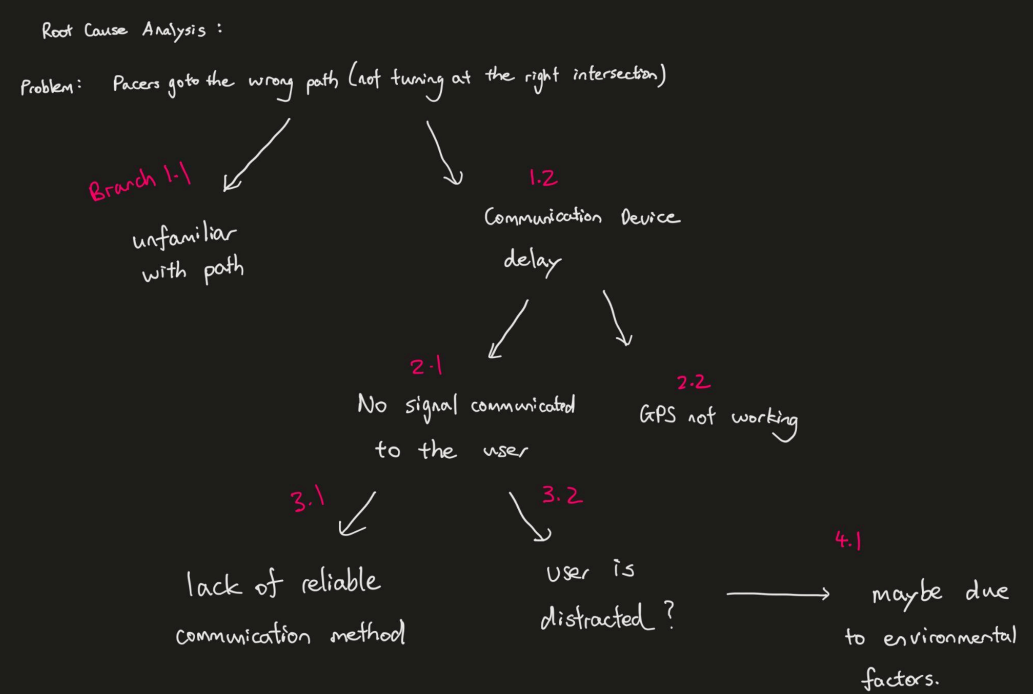
Figure 2: Mapping of root cause analysis
Requirements Framework - Frame
The requirements framework was created to address any issues that may arise in the creation of a design. This framework is greatly promoted by ESC101 and ESC102 for good reason. It is a powerful framework that allows effective and robust communication of the objectives to an engineering team. A requirements framework uses modularity to break down the objectives into easily defined requirements and evaluation criteria. A snippet of the requirements framework created for the RFP is shown in Figure 3. In order to fully understand and tackle an engineering design problem, a requirements framework is an effective means. Especially as problems get more and more complex, the benefits of a requirements framework become further apparent. As I move forward in my engineering career, I will definitely continue to apply a requirements framework to my projects when possible.
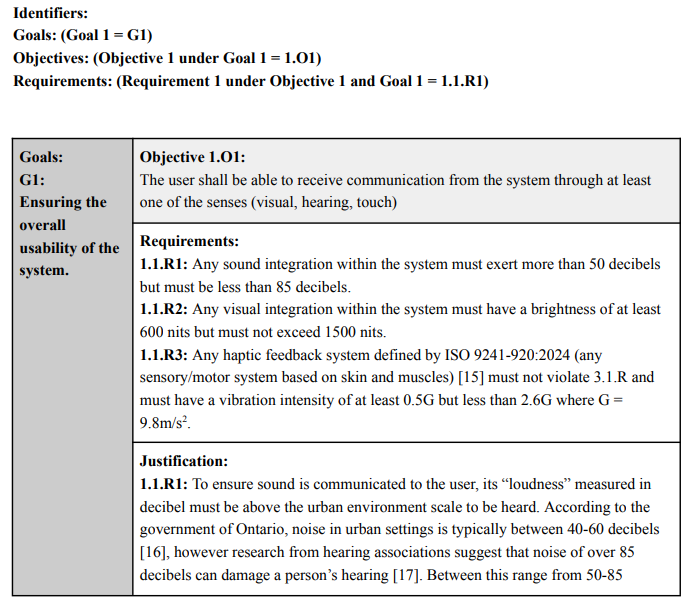
Figure 3: Snippet of the first requirement in the requirements framework created for the RFP (note: the evaluation criteria was cut off).
Reference Designs - Frame
Reference designs are a strong tool in further framing the problem. It aids in communicating what the gap in the opportunity is, and why the current marketplace does not satisfy the requirements. In figure 4 is a reference design discussed in my team's RFP. Reference designs are a form of resourcefulness , as it allows engineers to look at existing designs that are related to or cover parts of the given engineering requirements. Reference designs were especially useful in the context of my team's RFP, as the easy blatant solution initially is a GPS, however that defies the requirements of the RFP. I believe that reference designs are one of the strongest tools an engineer can use, as it not only allows for a better understanding of the problem, but also can almost act as a semi-diverging tool, by communicating the current solution space to engineers. Moving forward, I will definitely be considering reference designs in my projects.
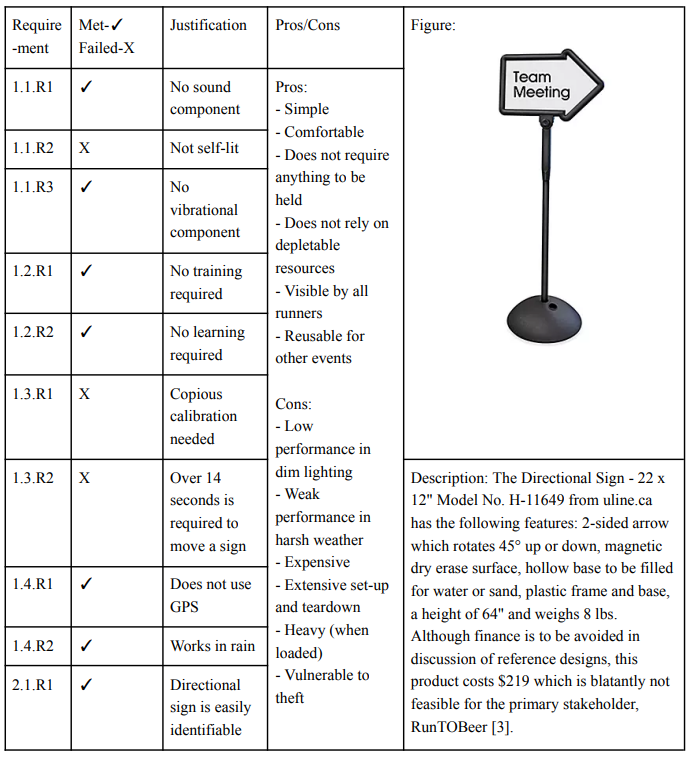
Figure 4: The first reference design, a directional sign, discussed in the RFP.
Where to go next?
Read about my next project, my team's ESC102 showcase design: Chess Pog
See Chess Pog